Phosphorus
Phosphorus is a non-renewable resource, yet essential to all life and severely limited over much of the earth's food production areas. However, phosphorus is also a valuable builder in laundry detergents and useful in overcoming the hardness of water. The problem then becomes one of disposal of the wastewater. Dumping the phosphorus loaded wastewater in the ocean removes that resource from future generations. Reusing wastewater for agricultural production (large scale municipal treatment works) or for greywater reuse for the home garden is an excellent opportunity to utilise the phosphorus.
The industry standard for phosphorus in laundry detergents is a maximum of 7.8 g phosphorus per wash, products identified with symobol "P". The reason for this level is unclear as there is no obvious scientific evident to show this level is safe. Indeed, converting 7.8 g P/wash for a front loader using 25 L per wash, gives a concentration of 300 mg/L. Interesting that many of the sewage treatment works are required to remove phosphorus to less than 1 mg/L.
When the symbol "NP" is used, the qualifying declaration is that "the product contains no added phosphorus. Levels up to 0.5% may be present". Interesting, 0.5% (of the powder) is equivalent to 5000 parts per million (5000 mg/kg) - a far cry from nearly nothing!! Seems to me that somewhere there is a real problem with understanding the environmental effects of phosphorus, yet very little is being done to limit the phosphorus entering the sewers. Where wastewater is discharged to land, the acceptable phosphorus load is determined by the soil properties and the area of which the wastewater is spread. Because phosphorus is a plant nutrient, its value as a fertiliser can be measured.
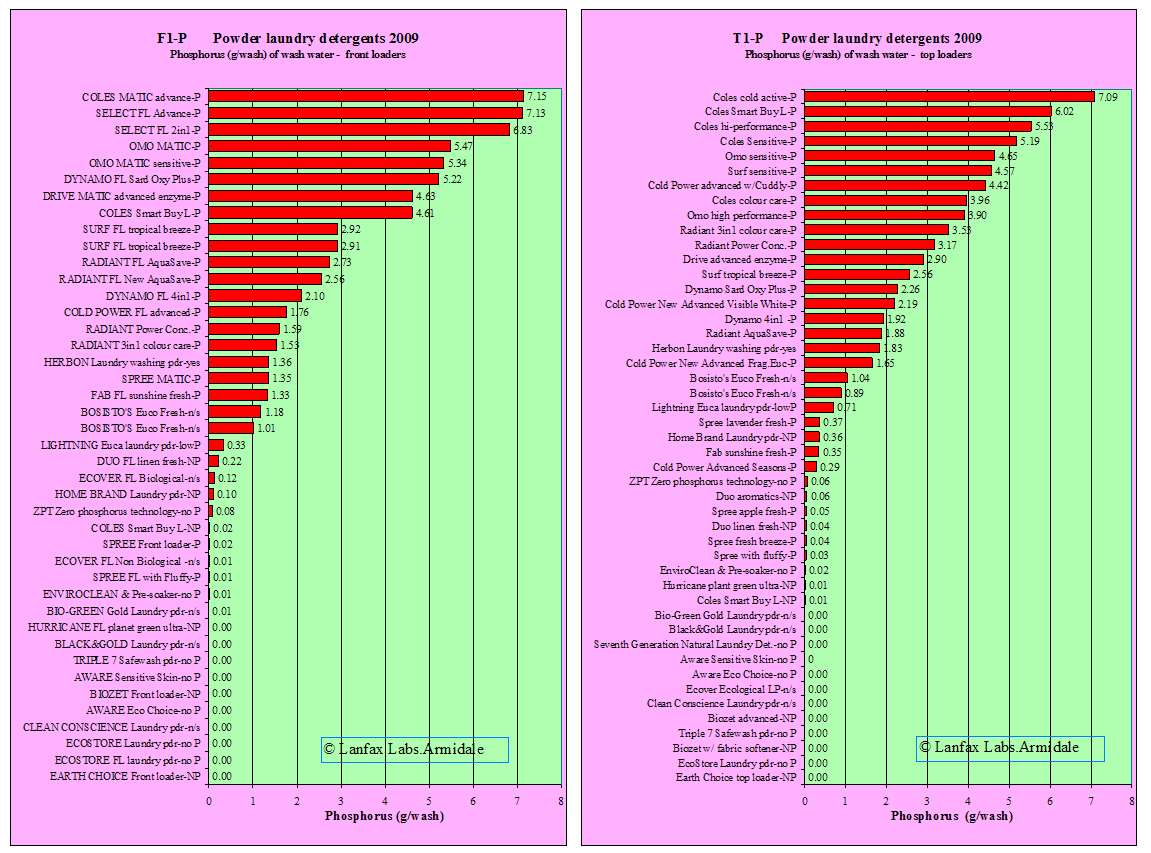
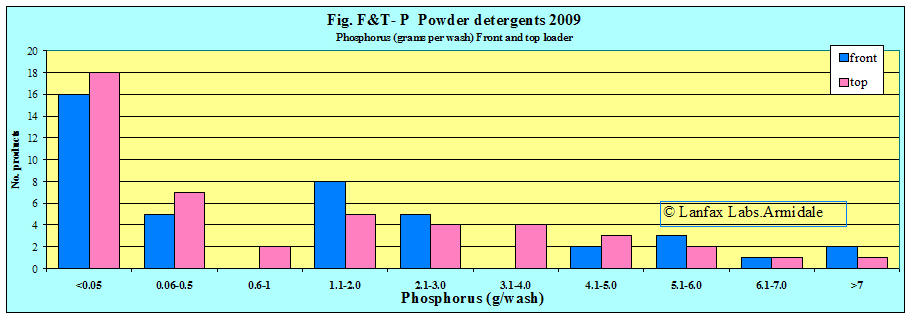
From the data below, the phosphorus load (g/wash) is the concentration (mg/L) multiplied by the volume of water use in the wash (L) and divided by 1000 to bring milligrams to grams. These values are shown in the graphs below.
It is NOT fact that Australian natives do not tolerate wastewater because of the phosphorus in the water. The high pH, the sodicity, salinity, or over-irrigation are likely causes of failure in any horticultural scene. There is good evidence from tree plantations irrigated with municipal effluent that many Australian natives thrive with the nutrients in wastewater. Many golf courses are irrigated with municipal wastewater with few effects from the phosphorus, certainly more from the sodium and salinity issues. I certainly have detailed knowledge of golf courses that irrigate municipal wastewater to Australian natives without detriment.
Assessment
A phosphorus load of 1 g/wash, for seven washes per week (average family use)
and 52 weeks a year, an effluent reuse area of 100 m2 for the
dispersal of all the laundry water only, equates to a fertiliser application
rate of 330 kg of single super per hectare, much more than the agricultural
producers are returned to their pastures (about 150 kg/ha). At higher loading
rates, the area across which the laundry water is applied needs to increase. It is not just a simple matter of tipping the laundry water out the back door. On sandy soils where there is no inherent ability of the soil to store
phosphorus, it simply leaches to groundwater or runs-off with stormwater and
enters the nearly drainage line.
The beneficial use of greywater, or reclaimed water is a legitimate use of a non-renewable resource. However, its application needs to be considered in light of the crop being produced (lawn or pasture, vegetables or horticulture) and the soils to which it is applied.
It is generally accepted that pastures and lawns uptake about 30 kg P/ha each year (that about 300 g over a 100 m2 application area) provided the grasses or pastures are removed. In the agricultural setting, grazing animal move the phosphorus around the paddocks and into 'camps'. In the home garden, lawn clipping and vegetation thinnings need to be removed for composting and use in other areas of the property that do not have wastewater reuse. So, if you were using a laundry detergent that had 2 g/wash (730 g P/year), you would need just over 240 m2 of application area to effective disperse the phosphorus. In many soils, there is an inherent ability to lock up phosphorus, but that is beyond the scope of this discussion.
Choice:
On sandy soils - choose a product labelled "NP"; on clay soils the lower the
phosphorus the better; for discharge to sewer, very low phosphorus levels are
desirable. On small areas where greywater is used, the lower the phosphorus the
better. Levels higher than 1 g/wash will require larger land areas over which to
spread greywater.
Summary
| Source | Lowest P value (g/wash) | Average P value (g/wash) | Highest P value (g/wash) |
| P front loader wash (42 samples) | 0.0 | 1.70 | 7.15 |
| P front loader specific (24 samples) | 0.0 | 2.49 | 7.15 |
| P top loader wash (47 samples) | 0.0 | 1.56 | 7.09 |
©Copyright: Lanfax Laboratories PO Box
4690 Armidale NSW 2350.
Contact: Dr Robert Patterson
+61 2 67751157 email:
lanfaxlabs@bigpond.com.au